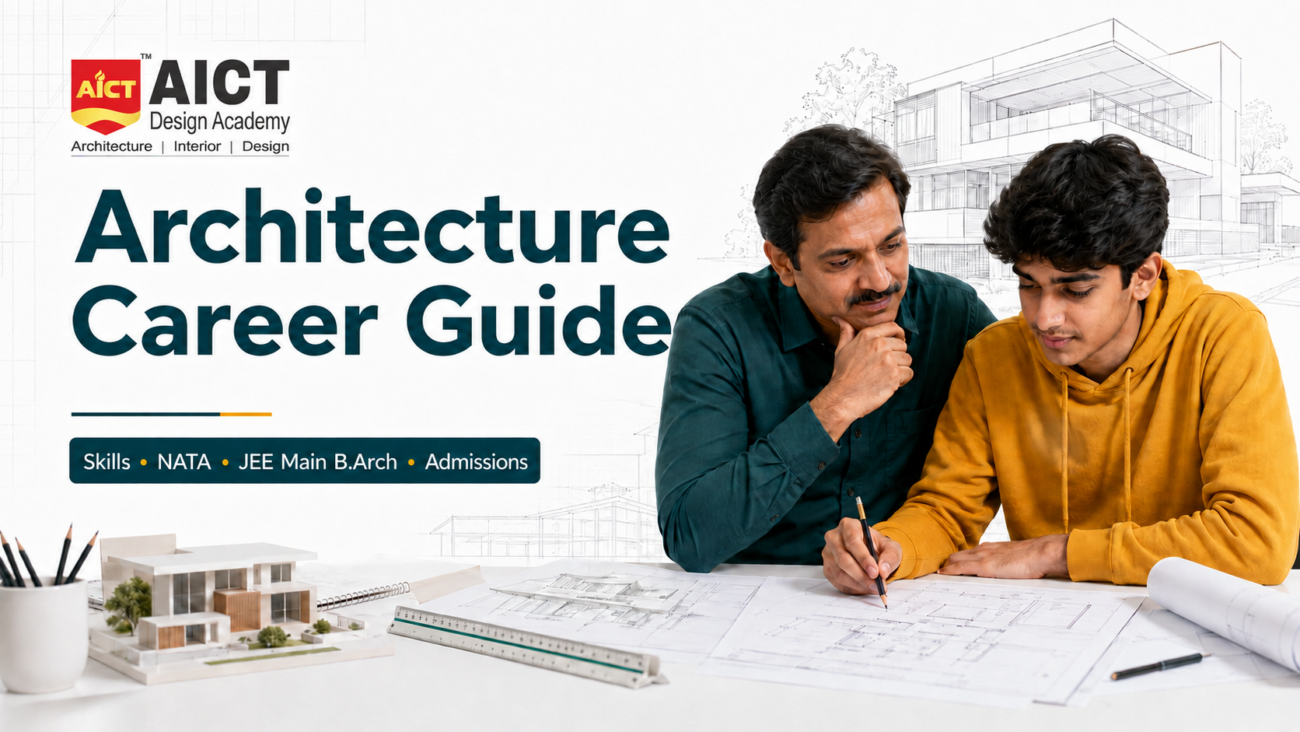
Architecture career guide with NATA, JEE Main B.Arch and admission information for students and parents

Is Architecture the Right Career for Your Child? A Complete Guide for Parents

Architecture Career Guide for Parents: Skills, NATA, JEE Main B.Arch and Admissions

When a child says, “I want to become an Architect,” many parents have questions.

Is Architecture only about drawing? Does the student need excellent artistic skills? What subjects are required? How do NATA and JEE Main B.Arch fit into the admission process? When should preparation begin?

Architecture can be a meaningful career option for students who are interested in buildings, spaces, creativity, observation, Mathematics and problem-solving. However, parents should understand the field carefully before making a decision.

This guide explains the important questions parents and students should consider while exploring Architecture as a career.

1. Why Should Parents Understand Architecture Before Deciding?

Parents should understand what Architects study, what work they do, which skills are required and how the admission pathway works.

Many parents are familiar with Engineering, Medical and Pharmacy careers, but may have limited information about Architecture. Proper understanding helps parents guide their child based on facts rather than assumptions or comparisons.

Career decisions should be based on the student’s interest, aptitude, academic background and willingness to learn.

2. What Does an Architect Actually Do?

An Architect plans and designs buildings and spaces. Their work is not limited to preparing drawings.

Architects may work on:

  • Residential buildings
  • Commercial spaces
  • Educational institutions
  • Public buildings
  • Urban spaces
  • Interior and spatial planning
  • Building documentation and coordination

An Architect studies client requirements, develops design concepts, prepares drawings, considers materials and coordinates with different professionals involved in a project.

3. What Interests May Indicate an Inclination Towards Architecture?

A student may explore Architecture if they show interest in:

  • Buildings and spaces
  • Drawing and sketching
  • Observation
  • Creativity
  • Geometry and Mathematics
  • Models and making things
  • Photography and visual details
  • Problem-solving
  • Understanding how things are designed

A student does not need to demonstrate all these interests. The purpose is to understand whether the student enjoys exploring ideas, spaces and design-related problems.

4. Is Excellent Drawing Required from the Beginning?
No. A student does not need to be an expert artist before exploring Architecture.

Architecture-related drawing is connected with observation, proportion, perspective, visualisation and communication. These skills can improve with regular practice and proper mentoring.

Students can begin with simple activities such as:

  • Sketching everyday objects
  • Drawing buildings and spaces
  • Understanding light and shadow
  • Practising basic forms
  • Observing proportion and perspective

Interest and willingness to practise are more important than initial perfection.

5. Why Do Creativity and Problem-Solving Matter in Architecture?

Architecture involves solving practical problems through creative thinking.

An Architect may need to consider:

  • How people will use a space
  • How movement will happen
  • Where light and ventilation will come from
  • How materials will be used
  • How to work within site limitations
  • How to balance beauty and function

Therefore, students need both creativity and logical thinking. A design should not only look attractive; it should also be practical and suitable for its users.

6. What Is the Role of Mathematics and Logical Ability?

Mathematics supports several aspects of Architecture, including:

  • Measurement
  • Geometry
  • Scale
  • Proportion
  • Spatial relationships
  • Area and volume
  • Logical reasoning

Students do not need to fear Mathematics, but they should develop a clear understanding of relevant concepts and practise regularly.

Logical ability also helps students analyse situations and find suitable solutions.

7. What Are NATA and JEE Main B.Arch?

NATA and JEE Main B.Arch are important entrance examination pathways associated with admission to eligible Bachelor of Architecture programs.

The exact examination pattern, eligibility criteria, accepted scores and admission process may vary depending on the year, institution and applicable authorities.

Students should understand:

  • Which examinations are relevant to their target colleges
  • What subjects and skills are tested
  • What the current eligibility criteria are
  • How counselling and admission procedures work

The latest official information should always be verified before applying.

8. When Should Entrance Preparation Begin?

Students can begin exploring Architecture through simple observation, creative and sketching activities during Classes 8–10.

More structured preparation can begin during Classes 11 and 12, depending on the student’s academic stage and goals.

Early preparation can provide time to develop:

  • Drawing and visualisation
  • Design aptitude
  • Mathematics
  • Logical reasoning
  • Speed and accuracy
  • Test-taking skills

The preparation plan should be realistic and should not create unnecessary pressure.

9. How Can Students Balance Board Examinations with Entrance Preparation?

Students should prepare a weekly schedule that includes both Board studies and entrance preparation.

The schedule may include:

  • Board subject revision
  • Mathematics practice
  • Drawing sessions
  • Aptitude exercises
  • Previous-year question practice
  • Mock tests
  • Error analysis

Students do not need to study every subject every day. Regular short sessions and proper planning can help maintain continuity.

Parents should encourage consistency without creating constant pressure about marks and comparison.

10. How Can an Aptitude Assessment Help?

An aptitude assessment can help students and parents understand areas such as:

  • Visual thinking
  • Observation
  • Creativity
  • Logical reasoning
  • Spatial understanding
  • Basic design awareness

It can provide useful guidance about the student’s present strengths and areas for improvement.

However, an aptitude assessment should not be treated as the only basis for choosing a career. It should be considered along with the student’s interests, academic background and willingness to learn.

11. What Should Students Understand About Eligibility and Admission Routes?

Students should carefully check:

  • Required subjects
  • Qualifying examination
  • Entrance examination criteria
  • Accepted scores
  • Application dates
  • Counselling process
  • Documents required
  • College-specific requirements

Eligibility rules and admission procedures can change. Students should refer to official examination authorities, counselling bodies and college websites for the latest information.

12. How Should Parents Shortlist Architecture Colleges?

Parents and students should compare colleges based on:

  • Official recognition and admission route
  • Eligibility requirements
  • Curriculum
  • Studio facilities
  • Workshops and practical exposure
  • Faculty and academic environment
  • Location and travel
  • Fees and other expenses
  • Accommodation requirements
  • Student’s long-term goals

A college should not be selected only because it is popular or because friends are joining there.

13. What Educational Expenses Should Parents Consider?

Apart from tuition fees, parents should consider:

  • Admission charges
  • Examination fees
  • Study materials
  • Drawing and model-making materials
  • Software requirements
  • Printing and submission expenses
  • Travel
  • Accommodation
  • Equipment and stationery

A complete financial plan helps parents make a practical and informed decision.

14. Why Should Official Admission Information Be Verified?

Exam patterns, dates, eligibility requirements, participating institutions and admission procedures may change.

Information shared through social media, relatives or unofficial websites may not always be current.

Before applying, students should verify details through:

  • Official examination websites
  • Official counselling authorities
  • College websites
  • Admission notifications

This is especially important for NATA, JEE Main B.Arch and college admission planning.

15. Why Should Students Avoid Career Decisions Based Only on Comparison?

Every student has different interests, abilities and learning preferences.

A student should not choose Architecture only because:

  • A friend is choosing it
  • A relative recommended it
  • It is considered popular
  • Someone else achieved success in it

Similarly, students should not reject Architecture only because they are not currently excellent at drawing.

The right decision should be based on interest, aptitude, preparation and long-term willingness to learn.

16. What Questions Should Students Ask During Counselling?
Students can ask:

  • What do Architects study?
  • What is the difference between NATA and JEE Main B.Arch?
  • Which skills should I improve?
  • How much Mathematics is involved?
  • When should I begin preparation?
  • How can I balance Boards and entrance preparation?
  • Which practice methods are followed?
  • How are tests and mock examinations conducted?
  • What should I consider while selecting a college?
  • What documents and admission steps are required?

Asking questions helps students participate actively in their own career decision.

17. How Should Students Prepare for a Personal Counselling Session?

Students should attend counselling with their parents and be ready to discuss:

  • Their interests
  • Favourite subjects
  • Academic performance
  • Career expectations
  • Concerns about drawing or Mathematics
  • Preferred study schedule
  • Possible Architecture colleges

If available, students may also bring their sketches, creative work or previous academic information.

A counselling session is an opportunity to understand the field clearly and create a realistic preparation plan.

Conclusion

Architecture is more than drawing buildings. It combines creativity, observation, visual thinking, Mathematics, problem-solving, technical understanding and practical planning.

Students do not need to be perfect at the beginning. With interest, regular practice, structured preparation and proper guidance, they can gradually develop the skills needed to explore Architecture.

Parents should support the student by understanding the profession, asking the right questions and making decisions based on individual interest and aptitude.

AICT Design Academy provides personal Architecture career counselling and structured preparation for NATA and JEE Main B.Arch aspirants in Pimpri-Chinchwad and Pune.

Parents and students can visit the institute to understand the Architecture career pathway and suitable preparation options.