

How to become an Architect in India – career guide for students and parents

Architecture Career Guide: How to Become an Architect in India

 Introduction

Many parents start exploring career options when their child is in Class 8, 9 or 10. If a student enjoys drawing, buildings, creative thinking, mathematics or understanding how spaces work, Architecture can be one career option worth exploring.

However, becoming an Architect is not only about drawing beautiful buildings. It requires creativity, technical understanding, mathematics, visual thinking, communication and consistent academic preparation.

This guide explains the general pathway to becoming an Architect in India.

What Does an Architect Do?

An Architect plans and designs buildings and spaces. Depending on their area of work, Architects may be involved in:


      • Residential and commercial building design

      • Space planning and layouts

      • Working drawings and technical details

      • 3D visualisation and presentations

      • Materials and construction understanding

      • Site coordination

      • Urban planning and sustainable design

      • Client discussions and project management

    Architecture combines creative thinking with technical knowledge. Students should understand this before selecting the field.

    Step 1: Explore Architecture During Class 8, 9 and 10

    Students do not need to start formal entrance preparation in Class 8 or 9. At this stage, the focus should be on awareness and exploration.

    Students can gradually develop:


        • Observation skills

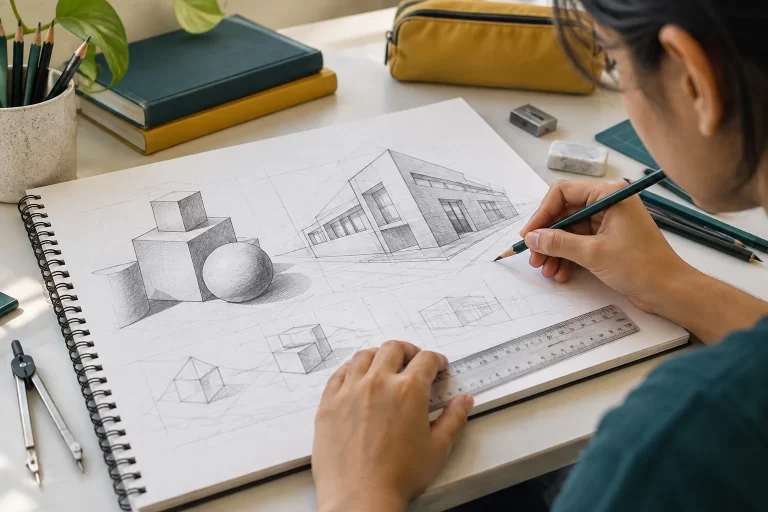
        • Basic sketching habits

        • Understanding of shapes and proportions

        • Interest in buildings and spaces

        • Visual thinking

        • Creativity and problem-solving

        • Basic mathematics and logical reasoning

      Parents should observe the child’s interests rather than forcing a career decision. A student does not need to be an excellent artist to explore Architecture, but curiosity, patience and willingness to learn are important.

      Step 2: Select the Appropriate Subjects After Class 10

      Students planning to pursue B.Arch generally need to carefully choose their Class 11 and 12 subjects. Mathematics and other subject requirements may vary according to the latest admission rules, entrance examination and institution.

      Parents should check the current eligibility criteria before finalising the subject combination. The Council of Architecture regulates the standards related to recognised architectural education in India.

      Students should not select subjects only because friends or relatives are choosing them. The decision should consider:


          • Student’s interest

          • Academic strengths

          • Career objective

          • Eligibility requirements

          • Target colleges and admission route

        Step 3: Understand NATA and JEE Main Paper 2A

        Students interested in B.Arch may come across two important entrance routes:

        NATA

        NATA stands for National Aptitude Test in Architecture. It assesses areas such as visual perception, cognitive skills, aesthetic sensitivity, logical reasoning and critical thinking.

        Preparation may include:


            • Drawing and visualisation

            • Design aptitude

            • Observation

            • Mathematics

            • Logical reasoning

            • Time-bound practice

          JEE Main B. Arch

          JEE Main Paper 2A is the B.Architecture paper conducted by the National Testing Agency. The official JEE Main website lists Paper 2A as the B.Arch examination.

          The requirements, examination pattern and admission process can change. Students should always check the latest official information before applying.

          NATA and JEE Main Paper 2A are not automatically required in the same way for every college. The suitable entrance route depends on the target institution and applicable admission rules.

          Step 4: Complete a B. Arch Degree

          B.Arch means Bachelor of Architecture. It is a five-year undergraduate degree programme in Architecture. The Council of Architecture prescribes and monitors standards for recognised architectural education in India.

          During the B.Arch programme, students may study:


              • Architectural design

              • Building construction

              • Architectural graphics

              • History of Architecture

              • Structural systems

              • Building services

              • Materials and construction technology

              • Computer-aided design

              • Professional practice

              • Practical training and design projects

            Students should check whether the institution and programme are appropriately recognised before taking admission.

            Important Skills for Future Architecture Students

            A successful Architecture student develops multiple skills over time:

            1. Observation

            Students should learn to notice buildings, spaces, proportions, light, shadows, movement and details around them.

            2. Visual Thinking

            Architecture involves converting ideas into sketches, plans, models and presentations.

            3. Creativity

            Creativity helps students develop different solutions to design problems.

            4. Mathematics and Logic

            Mathematics and logical thinking support planning, proportions and technical understanding.

            5. Communication

            Architects need to explain their ideas to clients, consultants, contractors and team members.

            6. Patience and Consistency

            Architecture education includes regular design work, corrections, submissions and revisions. Students must be prepared for a consistent learning process.

            Common Mistakes Parents Should Avoid

            Parents should avoid making decisions based only on:


                • A child’s drawing ability

                • Advice from relatives

                • Comparison with Engineering or Medical careers

                • Salary promises

                • One entrance examination score

                • What friends are choosing

              Before making a final decision, students and parents should understand the profession, academic pathway, entrance requirements and the student’s own interests.

              How Early Guidance Can Help

              For Class 8, 9 and 10 students, early guidance should focus on career awareness rather than pressure.

              A suitable career guidance session can help students and parents understand:


                  • What Architecture involves

                  • Whether the student is interested in spaces and design

                  • Which skills need development

                  • What subject planning may be required

                  • When formal entrance preparation should begin

                  • Whether Architecture is suitable for the student’s long-term goals

                Conclusion

                The journey to becoming an Architect in India generally includes career exploration, suitable subject planning after Class 10, preparation for the applicable entrance route, and completion of a recognised five-year B. Arch degree.

                Parents and students from Pimpri-Chinchwad and Pune can visit AICT Design Academy for personal Architecture career counselling, Drawing and Aptitude Assessment, and guidance regarding NATA and JEE Main B. Arch preparation.

                Call or WhatsApp: 9860607127

                Note: Eligibility criteria, examination patterns and admission rules may change. Students should verify the latest information on the official NATA, JEE Main and Council of Architecture websites before applying.

                Mastering NATA and JEE Main Paper 2 (B.Arch) for Architecture: Essential Tips for Success

                Preparing for the NATA 2024 and JEE Main Paper 2 (B.Arch) for Architecture entrance exams demands strategic planning and focused preparation. These exams assess your aptitude for architecture through drawing, aesthetic sensitivity, and a thorough understanding of architectural concepts. Here’s how you can ace these exams:

                Understanding the NATA Exam Structure and JEE Main Paper 2 (B.Arch)

                To excel in the NATA and JEE Main Paper 2 (B.Arch) exams, begin by understanding their structures. NATA primarily evaluates your drawing skills, aesthetic sensitivity, and architectural awareness. On the other hand, JEE Main Paper 2 (B.Arch) assesses your knowledge of mathematics, physics, and chemistry alongside architectural aptitude.

                Creating a Structured Study Schedule

                Crafting a well-organized study schedule is crucial. Allocate dedicated time for each subject – drawing, mathematics, physics, and chemistry – ensuring comprehensive coverage of the syllabus.

                Practice Regularly for Enhanced Performance

                Regular practice is key to success. Solve previous years’ NATA papers and JEE Main Paper 2 (B.Arch) sample tests to familiarize yourself with the exam formats and improve your problem-solving skills. Practice 2-D and 3-D compositions to strengthen your drawing techniques and spatial understanding.

                Prioritize Physical and Mental Well-being

                Maintaining good health is essential during your preparation phase. Eat nutritious meals, stay hydrated, exercise regularly, and ensure adequate sleep to stay focused and energized.

                Enhancing Drawing and Observational Skills

                For NATA, focus on refining your drawing abilities. Practice sketching from real-life scenarios, emphasizing perspective drawing and proportion accuracy. Develop keen observational skills to capture intricate details effectively.

                Stay Updated with Architectural Trends

                Keep abreast of current architectural trends, notable architects, and significant architectural landmarks. This knowledge enhances your architectural awareness, crucial for both NATA and JEE Main Paper 2 (B.Arch) exams.

                Utilize Mock Tests Effectively

                Take advantage of NATA-specific mock tests to simulate exam conditions. This practice not only familiarizes you with the exam environment but also helps in managing time during the drawing and aesthetic sensitivity sections.

                Strengthening Core Concepts for JEE Paper 2

                For JEE Main Paper 2 (B.Arch), ensure a strong grasp of fundamental concepts in mathematics, physics, and chemistry. Focus on problem-solving techniques and practical applications to tackle the diverse range of questions effectively.

                Embrace Collaborative Learning and Stay Motivated

                Engage in group study sessions to exchange insights and clarify doubts. Teaching others can reinforce your understanding of complex topics. Stay motivated by setting achievable study milestones and celebrating your progress.

                Seek Expert Guidance and Simulate Exam Conditions

                Seek guidance from experienced mentors, teachers, or online resources when encountering challenges. Closer to the exam date, simulate exam conditions during practice sessions to build confidence and improve time management skills.

                By adhering to these strategies, you can enhance your readiness for the NATA and JEE Main Paper 2 (B.Arch) exams. At AICT Design Academy, we are committed to preparing aspiring architects with comprehensive coaching and guidance tailored to excel in these competitive exams.

                12th HSC Board Results 2024

                12th HSC Board Results 2024: Check Your Scores Today at 1:00 PM

                The wait is finally over for thousands of students across the state as the 12th HSC Board Results 2024 are set to be declared today at 1:00 PM. This much-anticipated announcement will determine the academic future of many young minds, guiding their next steps towards higher education and career opportunities.

                How to Check Your 12th HSC Board Results 2024

                To ensure a smooth and hassle-free experience, students are advised to follow these steps to check their results:

                1. Visit the Official Website: Head to the official board website, which is the primary platform for result dissemination.
                2. Find the Result Link: https://mahresult.nic.in/
                3. Enter Your Details: Input your roll number and other required credentials.
                4. Submit and View Your Result: Click the submit button and wait for your results to be displayed on the screen.
                5. Download and Print: It’s recommended to download and print a copy of your results for future reference.

                What to Do After Checking Your Results

                1. Verify Your Details: Ensure that all the information on your mark sheet is accurate. Check for any discrepancies in your personal information and subject-wise marks.
                2. Collect Your Mark Sheet: Schools will provide the official hard copy of the mark sheet a few days after the results are declared. Make sure to collect it promptly.
                3. Plan Your Next Steps: Based on your results, you may need to make important decisions regarding your higher education. Whether you are applying for college, vocational courses, or competitive exams, it’s crucial to start the application process early.

                Dealing with Unexpected Results

                Not every student will achieve the results they hoped for. Here’s what to do if your scores are lower than expected:

                • Re-evaluation: You can apply for re-evaluation or rechecking of your answer sheets if you believe there has been a mistake.
                • Supplementary Exams: Boards often provide the option to sit for supplementary exams to improve your scores.
                • Career Counseling: Seek guidance from career counsellors to explore alternative educational and career pathways that align with your interests and scores.

                Final Thoughts

                The release of the 12th HSC Board Results 2024 marks a significant milestone in your academic journey. Regardless of the outcome, remember that this is just one step towards your future. Stay positive, explore your options, and pursue your passions with determination.

                For more updates and detailed information about the 12th HSC Board Results 2024, keep visiting our blog. Good luck to all students!

                NATIONAL APTITUDE TEST IN ARCHITECTURE(NATA 2024)

                National Aptitude Test in Architecture (NATA) is being conducted by COA, to qualify for the admission to Bachelor of Architecture.

                NATA measures the aptitude of the applicant for a specific field of study, i.e., Architecture, through assessment of cognitive skills, visual perception and aesthetic sensitivity tests, logical reasoning and critical thinking ability, etc., besides the learning that the candidate has acquired over the past years. With the objective of giving opportunities to a greater number of bright aspirants to join

                Schedule of Examination

                The candidates can appear for maximum of 3 attempts in NATA 2024 in one academic year. The best score out of all the attempts shall be considered for declaration of results. The score of NATA Test would be valid for a period of 2 academic years. Examination shall be conducted on all weekends starting from April to July, 2024 in two sessions, subject to number of candidates registered for the session. The candidates need to indicate their preference for session & city of examination while registering at NATA portal www.nata. in. The session during which the candidate will take the test as well as the Test Centres, shall be allotted by the Council, as far as possible, on the basis of cities and sessions preferred by the candidate in the application form. However, the decision of the Council in allotting Test Centre and session to candidates shall be final. The Tests shall be conducted as per the schedule as given below:

                Date & Time of Examination

                NATA 2024 EXAMINATION COMMENCING FROM:06-04-2024 ONWARDS
                Session 1 : 10.00 a.m. to 1.00 pm (180 mins/3.0 hours)Session 2 : 1.30 pm to 4.30 pm (180 mins/ 3.0 hours)